
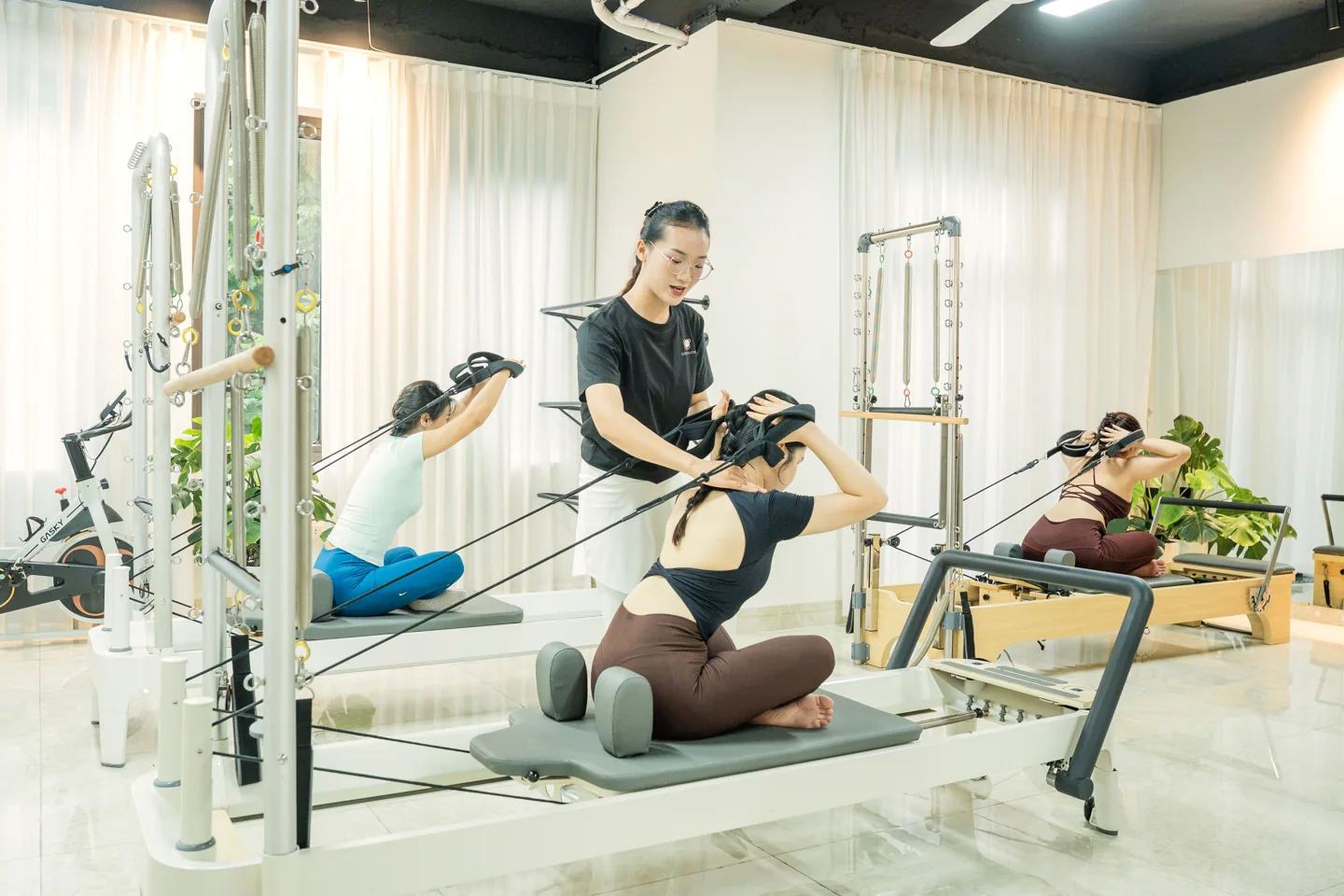
Core Pilates tracks training through an initial assessment, agreed goals, observations during sessions and subsequent reviews. Instructors use these records to consider changes and adapt each member's program.
This is part of Core Training — putting results at the center.
Record your starting point
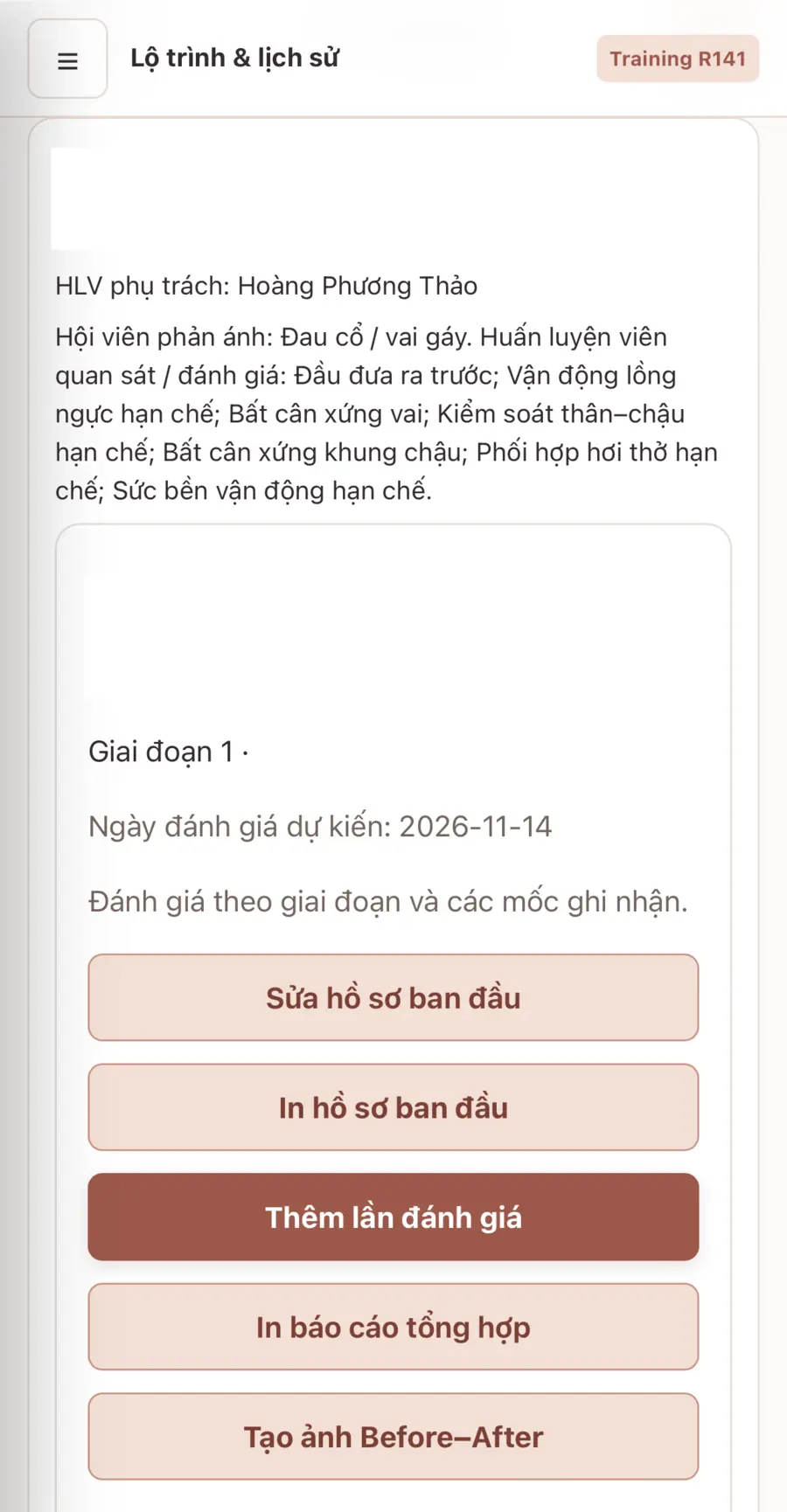
Before training begins, Core discusses your current condition, exercise history, difficulties in daily activities and what you would like to improve. The assessment brings together your own account and observations of posture, movement and body control.
Assessment photographs and relevant information form a reference for later reviews. People with similar goals may have different movement difficulties; these differences help inform exercise selection.
View an anonymized initial assessment sample (Vietnamese) ↗
Core Training lets instructors keep records, add assessments and review training history in one place. A planned review date helps organize follow-up; observations can still be added whenever needed.
Agree on meaningful goals
Goals should reflect your needs. Alongside body composition, these may include moving more comfortably, improving control or building a consistent exercise habit. You and your instructor discuss priorities and a suitable starting level.
Relevant observations may include comfort in daily activities, movements you previously found difficult, coordination during exercise and how you feel during and after sessions. What is tracked depends on the individual.
From goals to a training program
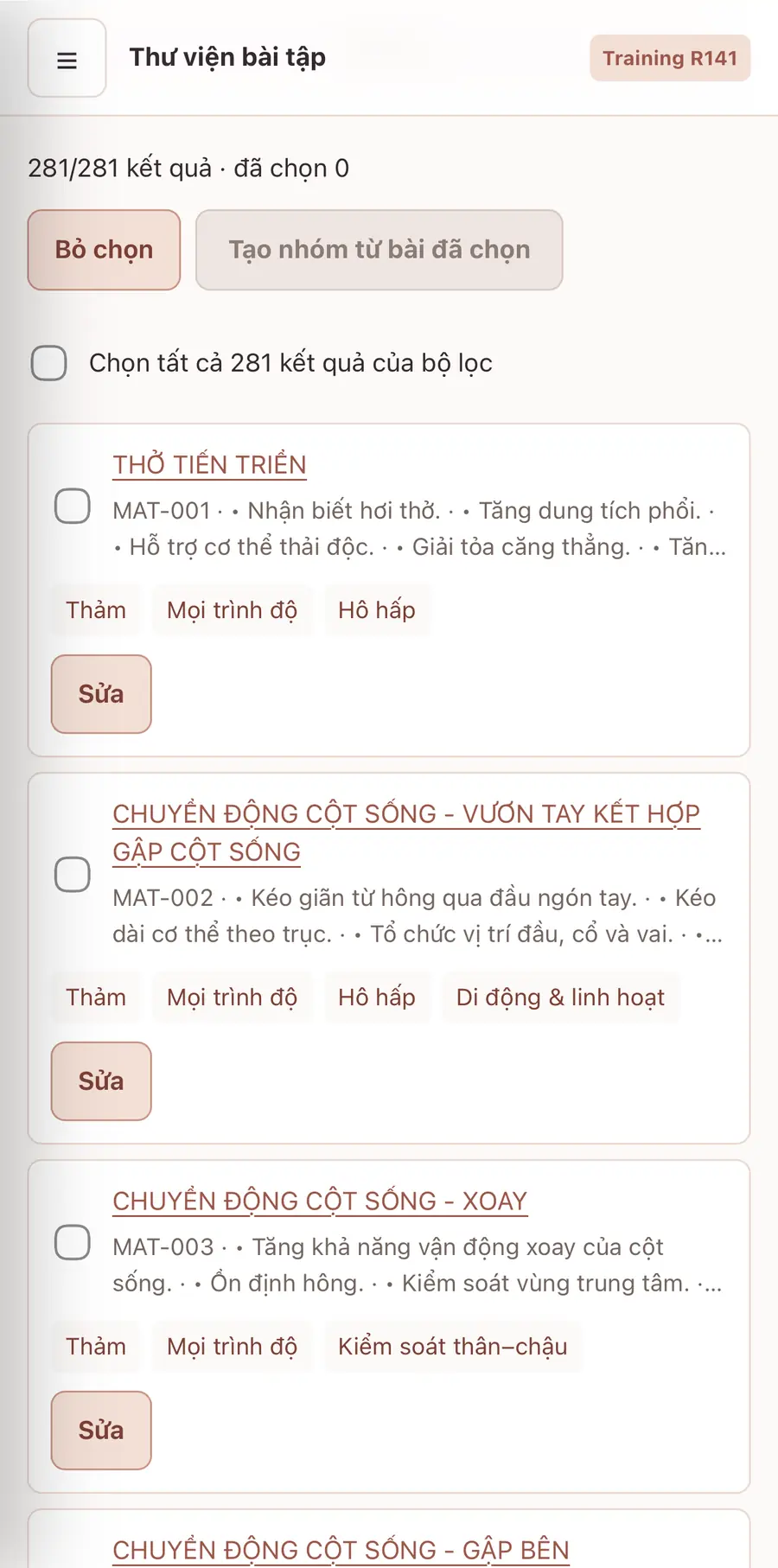
Using the assessment and agreed goals, instructors select exercises from the library, considering equipment, level and training priorities. The program is reviewed against the member’s movement ability and feedback.

Observe throughout each session
During each session, the instructor observes posture, breathing, coordination and how independently the member moves. If a member raises their shoulders or leans to one side to complete an exercise, the instructor adjusts guidance, support or difficulty. A movement that previously needed substantial assistance but can now be performed more independently is also worth recording.
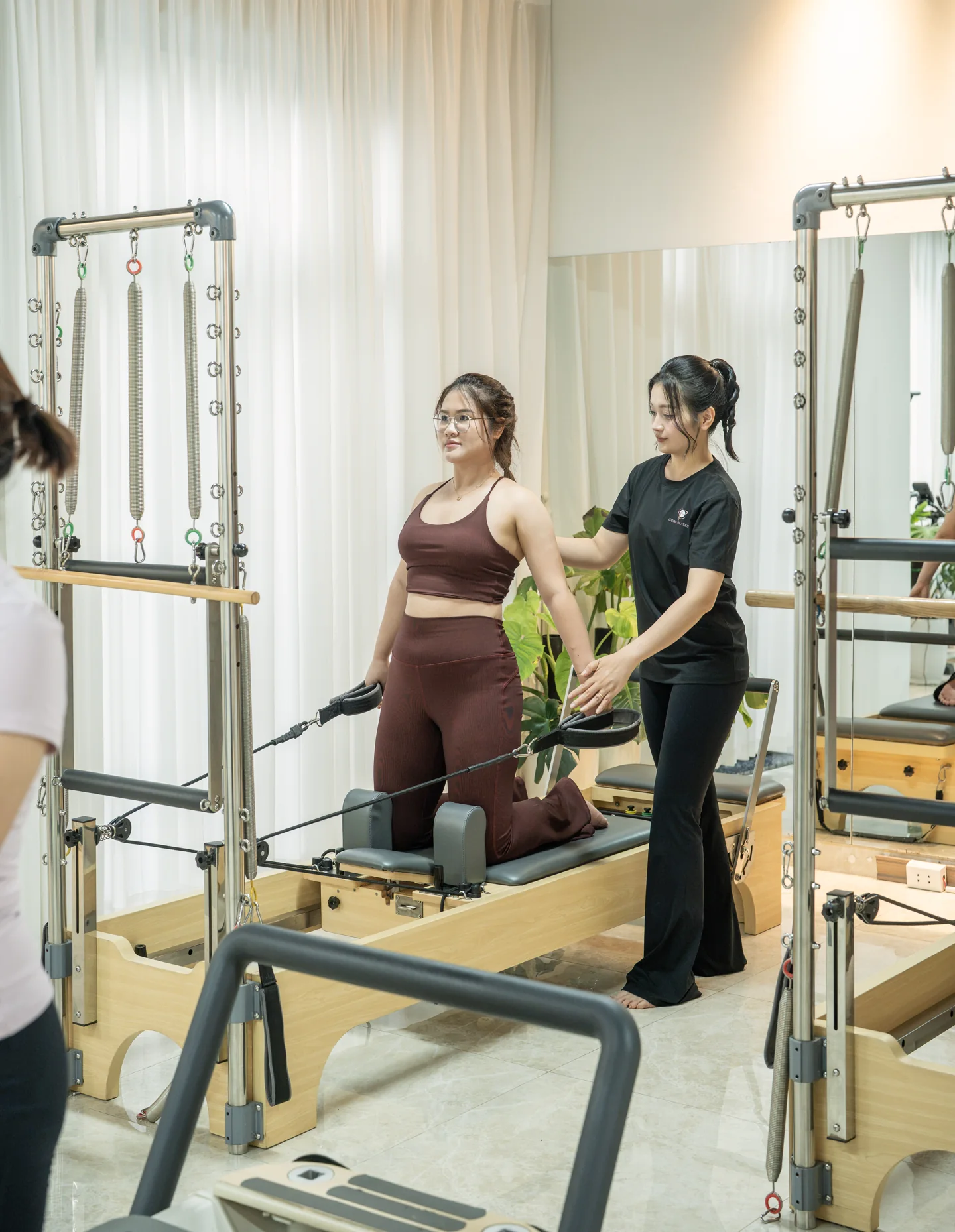
Your feedback matters too. Effort, fatigue, discomfort and changes in daily activities give the instructor additional information when considering guidance and exercise choices.
Compare assessment milestones
At later reviews, Core compares recorded information with the initial assessment and training goals. Photograph and movement comparisons need to account for assessment conditions; one camera angle or exercise attempt cannot establish overall progress.
SAMPLE TRAINING RECORD
A journey recorded at Core
An anonymized sample record, from the initial assessment to the follow-up review.
· Starting point
Understand the starting condition and goals
The member wanted to improve body composition and reported neck and shoulder discomfort. The instructor recorded points requiring attention in head–shoulder posture, thoracic movement and trunk–pelvis control.
Training priorities
Improve body control, develop strength and support the member's body-composition goals.· Follow-up review
Compare with the starting point
The instructor noted more mobile shoulders, improved control and a firmer, leaner appearance. Photographs and body-composition measurements were considered alongside these observations.
- Body weight
- 49.4 → 47 kg
- Body fat
- 35.6 → 29.3 %
Measurements are reviewed alongside photographs, movement ability and the member’s feedback.
FROM OBSERVATIONS TO THE NEXT TRAINING DECISION
Track to inform adjustments
Using the recorded changes, the instructor and member review their goals and decide which exercises to continue, adapt or make more challenging.
Results and the time needed vary from person to person.
View the sample progress report (Vietnamese) ↗Use observations to adapt training
As control improves, instructors may consider increasing difficulty or expanding goals. When an exercise is unsuitable, guidance, assistance or exercise selection needs to be reviewed.
Your instructor guides you directly. Master Bui Thi Nu oversees professional practice, working with the team to review and adjust programs based on each member's observed changes.
Initial assessment → Goals → Program design → Progress tracking → Adjustments.
Explore the Core Training process →
Start with your needs
Allow approximately 90 minutes for a free trial, including assessment, a discussion of your needs and trial exercise. Core confirms availability in advance to arrange an instructor.
An exercise assessment does not replace medical diagnosis. Members with medical conditions or symptoms should seek appropriate clinical assessment and advice.